

How AI is quietly rewriting B2B marketing
The content-volume problem is solved. The taste problem just got harder. The marketers who win now aren't the ones with the most output — they're the ones with the best filter.
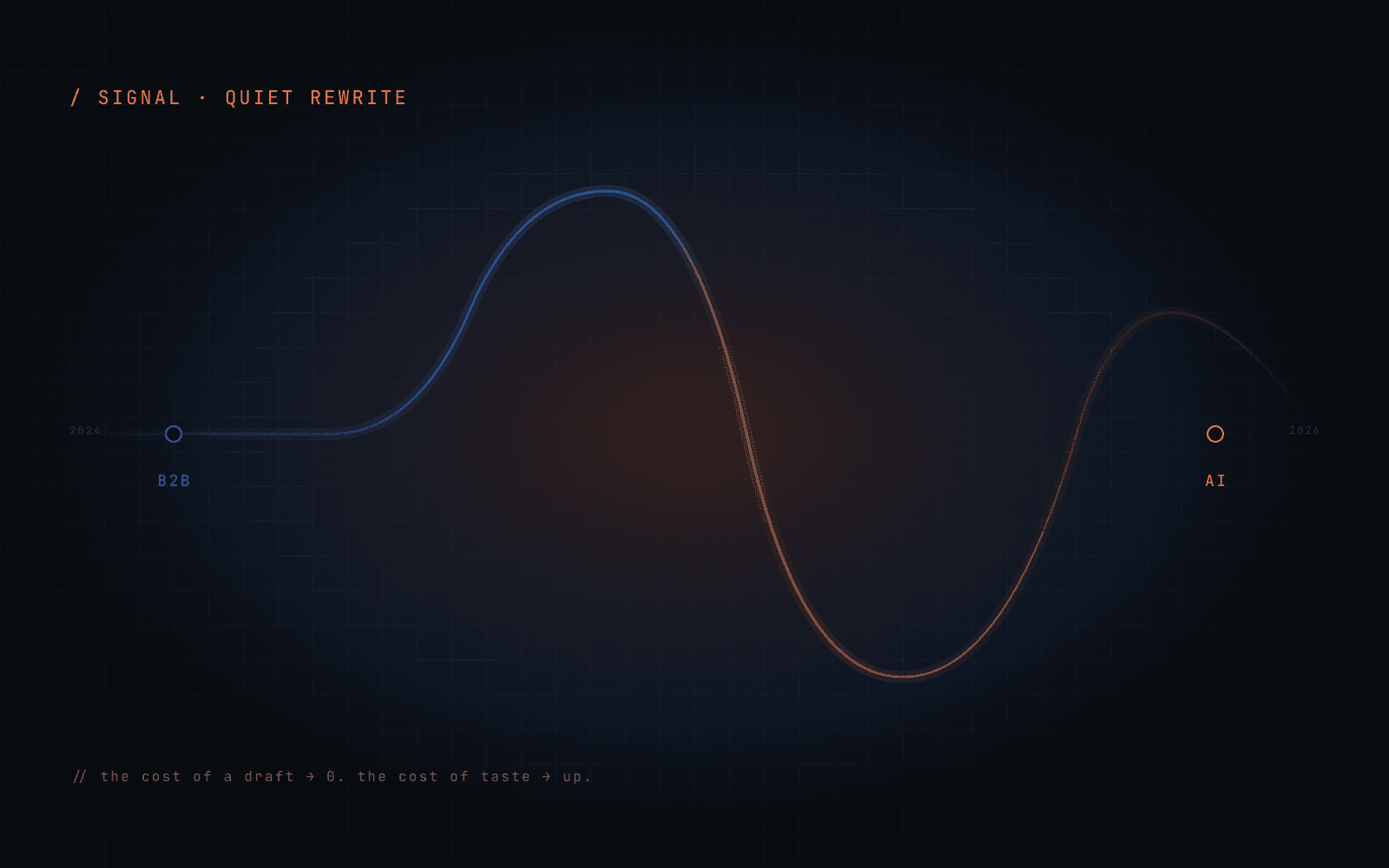
Every B2B marketer can now produce ten times more content than they could two years ago. So can every competitor. The volume problem — the one whole departments existed to solve — is solved. What's left is harder.
The shift
For a long time, marketing leverage was about reach: more posts, more emails, more whitepapers, more shots on goal. AI ate that. A senior person with one good model and a sharp brief can produce a week of content in an afternoon. The cost of a draft has gone to near zero, which means the differentiator is no longer the draft.
What still matters
What you can't buy with a model: a point of view, a sense of when something is true, and the taste to know which draft is worth shipping. The marketers we trust right now aren't producing more — they're filtering harder. They ship fewer pieces, and the pieces are sharper.
Look at the LinkedIn feed. Three out of four B2B posts now sound like the same model wrote them, because the same model did. The companies cutting through aren't the loudest — they're the ones that sound like a person, with a position you can argue with.
The new job
The marketer's job is becoming the editor's job. Prompt, draft, kill, edit, ship. The AI generates ten options; the marketer picks the one that says something only this company can say. That's not the same job as writing the first draft yourself. It's a harder job — taste at speed — and it's the one we're hiring for.
AI didn't replace the marketer. It replaced the junior who used to do the first pass. Seniors get more leverage; everyone else gets faster sameness. The compounding is going to be uneven.